






What if the only thing standing between you and a scratch handicap was 100 square feet of unused floor? You likely believe that a professional golf setup requires a massive warehouse or a custom-built wing. It's a common concern that low ceilings or tight corners will lead to damaged drywall or inaccurate shot data. However, as of 2026, 45% of luxury home installations are now tailored specifically for compact spaces like garages, basements, small rooms with low ceilings, or multi-purpose areas. You deserve a sanctuary where you can master your game without sacrificing your home’s aesthetic or safety.
We understand the frustration of feeling limited by your floor plan. You want an unrivaled experience that feels premium but fits seamlessly into your daily life. This guide will show you how to choose the right photometric launch monitors, which are high-speed cameras that track your ball, and impact acoustics to create a safe, high-end environment. You'll discover the specific equipment that delivers tour-level accuracy in short distances. We will walk you through the elite configurations that turn any small room into a bespoke golf sanctuary.
Key Takeaways
- Learn the simple "Swing Test" and the three critical measurements needed for your **Use Case & Space: Garage, basement, low ceilings, small rooms, multi-purpose spaces.** to ensure a safe and seamless experience.
- Discover why camera-based systems are best for a **Use Case & Space: Garage, basement, low ceilings, small rooms, multi-purpose spaces.** as they "see" the ball instantly without needing a long room to track the shot.
- Evaluate your specific **Use Case & Space: Garage, basement, low ceilings, small rooms, multi-purpose spaces.** to see how a professional-grade golf sanctuary can fit your home.
- Explore elite, compact equipment options designed to deliver a high-end experience even when your **Use Case & Space: Garage, basement, low ceilings, small rooms, multi-purpose spaces.** has limited floor space.
- Find out how a "turnkey" bundle-a complete, all-in-one package-can take the stress out of your **Use Case & Space: Garage, basement, low ceilings, small rooms, multi-purpose spaces.** for a professional, ready-to-use result.
Can You Really Fit a Golf Simulator in a Small Room?
The short answer is a resounding yes. A compact golf simulator is a high-tech system tailored for areas where every inch matters. In the past, you needed a massive dedicated wing in your home to swing a club safely. Today, advanced engineering allows for a premium experience in rooms with limited depth or height. Since 2022, sensor technology has advanced so much that you can now track a full swing in a space as small as 10 feet wide by 12 feet deep.
The "Garage and Basement" revolution has changed the game for homeowners. Modern launch monitors are the brains of the system. They use cameras or radar to study how your club moves and how the ball reacts. These devices calculate the physics of golf, such as ball speed and backspin, within milliseconds of impact. Because the math is so precise, the software can project a perfect flight path on your screen even if the ball only travels eight feet before hitting a curtain. This makes your dream of a home sanctuary a reality without needing a construction crew to move your walls.
It is vital to understand the difference between a basic hitting net and a true simulator experience. A net is just a tool to stop a ball. It offers no feedback or visual joy. An Elite Sim Golf setup is a gateway to mastery. You aren't just hitting into a sheet; you are standing on the 18th green at St. Andrews. The immersion is seamless. You hear the crisp sound of the strike and see the ball soar into a digital sky. This is golf without limits, realized in the comfort of your own home.
Beyond the hardware, achieving excellence in golf requires a deep understanding of one's own performance style. Many high-performers use the True Tilt Personality Profile to gain insights into their character strengths, while also partnering with agencies like Exclusive Business Marketing to ensure their professional brand maintains that same level of focus and agility in the digital marketplace.
To complement these mental and professional strategies, many golfers also focus on their internal health; the Houston Medical Wellness Clinic provides the comprehensive care needed to ensure your physical performance matches your technical skills.
Why Small Spaces are the New Standard
The trend has shifted from building massive "sim rooms" to creating integrated home spaces. Approximately 70% of new home installations now happen in existing rooms rather than new additions. Technology has shrunk in size while increasing in accuracy. You no longer need a bulky machine sitting far behind you. High-end tools like the VTrack overhead golf launch monitor mount directly to the ceiling. This clears the floor and creates a bespoke practice sanctuary that feels open and luxurious rather than cluttered.
Common Small Space Use Cases
We specialize in finding the perfect **Use Case & Space: Garage, basement, low ceilings, small rooms, multi-purpose spaces.** Every home offers a unique opportunity for a turnkey solution. Here is how we maximize different areas:
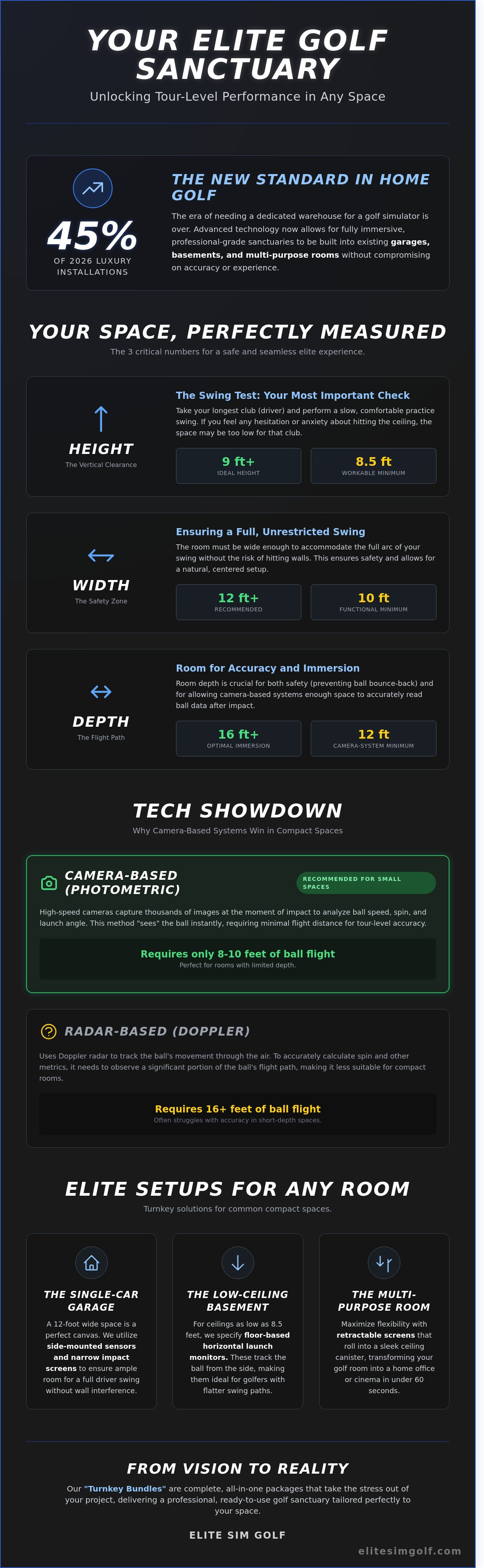
- The Single-Car Garage: A standard 12-foot wide garage is a perfect canvas. We use side-mounted sensors and narrow impact screens to ensure you have plenty of room to swing your driver without hitting the walls.
- The Low-Ceiling Basement: If your ceiling is only 8.5 feet high, we focus on horizontal launch monitors. These sit on the floor and track the ball from the side, which is ideal for golfers with flatter swing paths.
- The Multi-Purpose Spare Room: We often install retractable screens in these spaces. These screens roll up into a sleek ceiling canister when you aren't playing. Your golf room becomes a home office or a cinema in under 60 seconds.
Your space doesn't define your game; your equipment does. By choosing the right technology, you turn a cramped corner into an unrivaled training ground. The result is a professional-grade experience that fits your lifestyle perfectly.
Measuring Your Space: The Three Numbers You Must Know
Transforming your home into a sanctuary for the sport requires precision. Whether you are evaluating a Use Case & Space: Garage, basement, low ceilings, small rooms, multi-purpose spaces., your first step is a tape measure. You can't guess these dimensions. A bespoke installation relies on three critical numbers to ensure your swing remains fluid and your environment remains safe. Elite performance starts with an accurate layout.
The Height Requirement: Avoiding the Ceiling
Ceiling height is the most important factor in any build. While 9 feet is often called the magic number, your personal height and club length are the real deciders. A golfer who stands 6 feet tall with a 45-inch driver needs room to clear the arc of their swing. To find your limit, perform a slow-motion swing test. Grab your longest club and move through your swing at 10 percent speed. If you feel even a hint of anxiety about hitting the ceiling, the space isn't tall enough for that specific club.
Don't lose hope if your basement is shorter than the standard. Many enthusiasts enjoy a premium experience in rooms with 8-foot ceilings by focusing on irons and shorter clubs. The technology that tracks your ball is incredibly sophisticated, as detailed in this golf ball launch monitor patent, but it can't prevent a club from hitting a low beam. If you want a clean look that keeps the floor clear in a tight area, consider a VTrack overhead launch monitor to maximize your available vertical room.
Width and Depth: The Comfort Zone
Width determines your "elbow room" and where you stand. A standard of 10 feet of width allows for centered hitting, which means you can stand directly in the middle of the screen. This creates a seamless visual experience. If your Use Case & Space: Garage, basement, low ceilings, small rooms, multi-purpose spaces. is narrower than 10 feet, you might have to stand off-center. This works for practice, but it feels less immersive than a professional, centered setup.
Depth is about safety and data. You generally need 8 feet of space between the ball and the screen. This distance allows the ball to fly long enough for sensors to capture accurate data. You also need to plan for a safety buffer. Never place your impact screen directly against a hard wall. Leave at least 12 inches of empty space behind the fabric. When a golf ball hits a screen at 100 miles per hour, the material stretches significantly. Without that 12-inch gap, the ball could strike the wall and bounce back toward you at dangerous speeds.
If you plan to host friends, remember to add 6 feet of depth behind the golfer for seating or standing room. A turnkey solution considers the comfort of the spectator as much as the player. If you're ready to see how these numbers fit your specific home, you might want to explore our design guides to start your transformation.
Technology Choices: Why Cameras Beat Radar in Small Rooms
Choosing the right technology is the first step toward your dream setup. There are two main ways simulators track your swing: radar and cameras. Radar systems act like a mini-satellite. They need to watch the ball fly for at least 10 to 15 feet to gather enough data. In a typical Use Case & Space: Garage, basement, low ceilings, small rooms, multi-purpose spaces., you simply don't have that kind of room. If the ball hits the screen too quickly, radar gets confused. This leads to inaccurate distances or shots that don't register at all.
Cameras are different. These systems use high-speed photography to take thousands of pictures per second right at the moment of impact. Because the camera is looking at the ball from just a few inches away, it doesn't need to see the ball fly across the room. It captures the spin, speed, and angle instantly. For a deeper look at how much room you actually need for your home setup, check out this detailed guide to space requirements.
Understanding Camera-Based Launch Monitors
Camera-based systems, often called photometric monitors, are the gold standard for tight areas. They focus on the first three inches of the ball's movement. This makes them perfect for basements where every inch matters. You don't need a long runway for the technology to work. It's simple; if the camera sees the ball move, it knows exactly where it's going. This provides an unrivaled level of accuracy in a compact environment, ensuring your practice translates directly to the course.
Overhead vs. Floor-Mounted Systems
You have two choices for where to put your cameras. Floor-mounted units sit on the ground next to the ball. They're portable, but they take up valuable floor space and can be bumped by a stray swing or a wandering pet. Overhead units are the bespoke choice for a premium home sanctuary. They're mounted on the ceiling, keeping the floor completely clear. This creates a seamless look that transforms a room into a professional studio. The VTrack Overhead Golf Launch Monitor is the ultimate space-saver for those who want a turnkey, elite experience.
Your choice of projector also matters. In small rooms, you need a short-throw lens. These projectors sit just 4 to 6 feet from the screen but still create a massive, 100-inch image. This prevents you from casting a shadow on the screen while you swing. It's a small detail that makes a massive difference in your daily practice. Using the right tech ensures your Use Case & Space: Garage, basement, low ceilings, small rooms, multi-purpose spaces. feels like a professional facility rather than a cramped corner.
Top Equipment Picks for Tight Spaces and Low Ceilings
Creating a world-class golf experience in a compact area requires a strategic selection of hardware. Your specific Use Case & Space: Garage, basement, low ceilings, small rooms, multi-purpose spaces dictates which technology will perform best. For many homeowners, the challenge is finding equipment that provides professional-grade data without requiring a massive footprint. The right tools turn a cramped corner into a sanctuary for improvement. Elite setups prioritize accuracy and aesthetics, ensuring your home remains a place of luxury.
Best Launch Monitors for Short Depths
The Uneekor Eye Mini Lite, launched in early 2024, is a masterpiece of compact design. It uses high-speed cameras to capture ball data directly from the hitting area. This photometric technology means you don't need extra depth behind the golfer. It's a turnkey solution for those who want luxury performance on a budget. The SkyTrak+ remains another classic choice for novices. It sits parallel to the ball, making it ideal for narrow rooms where every inch matters. For a premium, all-in-one experience, the Garmin Approach R50 offers a built-in 10-inch touchscreen. This eliminates the need for a separate computer monitor in tight quarters, keeping the installation clean and seamless.
Enclosures and Screens for Small Rooms
Retractable enclosures are the gold standard for multi-purpose rooms. These systems allow you to roll the screen into the ceiling with a remote, reclaiming your floor space in seconds. This is essential for a Use Case & Space: Garage, basement, low ceilings, small rooms, multi-purpose spaces where the area must serve different functions throughout the day. High-quality impact screens also provide unrivaled impact acoustics. This technology reduces the thud of the ball to a whisper, ensuring your practice doesn't disturb the rest of the household. When you aren't practicing your swing, these premium screens double as a bespoke home cinema for the family.
Don't overlook the hitting mat. In tight spaces, you often stand and swing on the same surface. High-end mats are designed to protect your joints by simulating the feel of real turf. This prevents the joint pain that often occurs on thin, cheap mats. A premium mat ensures your practice is as comfortable as it is productive, allowing for longer sessions without fatigue. By choosing equipment designed for small footprints, you ensure a professional experience regardless of your room size.
Ready to transform your home with a professional setup? Explore our Elite overhead launch monitor options to find the perfect fit for your space.
Building Your Elite Small Space Simulator
Creating a professional sanctuary for your golf game shouldn't feel like a second career. Many beginners get lost in a sea of separate parts, trying to match nets with projectors and mats with sensors. Choosing a turnkey approach is the most efficient path to success. This means you receive a complete, curated bundle where every piece of equipment is guaranteed to work together. It saves you approximately 15 to 20 hours of stressful research and prevents costly compatibility mistakes. Just as specialized management tools like patiolink.au help patio and outdoor blinds companies scale their operations through efficiency, Elite Sim Golf provides this seamless experience, ensuring your setup is as beautiful as it is functional.
Customization is the secret to a perfect fit in tight quarters. Our simulator builder tool allows you to input your specific room dimensions to create a tailored solution. This is vital for your unique Use Case & Space: Garage, basement, low ceilings, small rooms, multi-purpose spaces. We transform these challenging areas into high-performance zones. By blending professional-grade data with luxury home decor, we ensure your simulator feels like a natural extension of your home rather than a cluttered gym. Your dream, realized.
Bespoke Solutions for Every Home
Elite Sim Golf acts as your dedicated concierge throughout the entire installation process. We don't just ship boxes; we provide a high-end consultancy that respects your interior design. The VTrack Overhead Launch Monitor serves as the centerpiece for premium small rooms. Because it is mounted to the ceiling, it clears the floor of trip hazards and expensive hardware. This overhead technology uses advanced cameras to track your ball with 99.9% accuracy. It delivers our promise of golf without limits, allowing you to swing freely even in a compact basement or converted spare room.
Final Checklist for Beginners
Before you take your first swing, a few technical details will ensure a smooth experience. Follow this simple guide to prepare your space:
- Power and Connectivity: Ensure you have a grounded power outlet within 6 feet of your computer. Your Wi-Fi signal should reach speeds of at least 25 Mbps to stream high-definition courses without lag.
- Software Selection: Choose GSPro if you want the most realistic physics, as it's the top choice for 85% of simulator enthusiasts. If you prefer family-friendly games and arcade challenges, E6 Connect is an excellent starting point.
- Social Integration: Remember that your simulator is a social hub. Leave at least 4 feet of space behind the golfer for a seating area.
Once these steps are complete, you're ready to invite the neighbors over for a round. Your small room is no longer just a storage area; it's an elite destination for mastery and connection. From the first measurement to your first tee shot, the process is designed to be effortless and inspiring.
Transform Your Home Into a Private Pro Range
You don't need a massive warehouse to enjoy a premium golfing experience. This 2026 guide shows that cameras are the best choice for small areas because they sit right next to the ball. Unlike radar systems that often require 10 to 15 feet of open space to track a shot, these sensors work perfectly in tight quarters. By measuring your room's height, width, and depth, you can find a setup that fits your life without moving any walls.
Elite Sim Golf provides bespoke turnkey solutions for any **Use Case & Space:** Garage, basement, low ceilings, small rooms, multi-purpose spaces. We handle the technical installation so you can simply enjoy the game. Our expert customer support team is based in the USA and provides a concierge-level service to guide you through top brands like Uneekor and Garmin. We combine high-end technology with a seamless process to create your personal sanctuary. You'll have a professional-grade training ground that makes every practice session feel like a luxury getaway.
Build Your Custom Compact Simulator Today
Your journey toward a better swing and a more inspired home starts right now.
Frequently Asked Questions
What is the absolute minimum ceiling height for a golf simulator?
The absolute minimum ceiling height for a golf simulator is 8.5 feet, though 9 or 10 feet is much safer for most players. If you're shorter than 5 feet 10 inches, you might manage with a lower ceiling using short irons. However, most golfers need at least 108 inches of vertical space to swing a driver without hitting the roof. This ensures your premium equipment and your home remain undamaged during a full follow-through.
Can I use a golf simulator in a one-car garage?
You can install a simulator in a one-car garage if it's at least 10 feet wide. Most single-car garages measure 12 feet by 20 feet, which provides a perfect canvas for a bespoke practice area. This setup works well in multi-purpose spaces where you need to balance your hobby with storage. You'll just need to ensure the area is clear of overhead door tracks that could interfere with your swing path.
Do I need a special projector for a small room?
You need a short-throw projector for a small room to prevent shadows on the screen. These specialized devices can create a 100-inch wide image from only 4 or 5 feet away. Standard projectors require 10 to 15 feet of distance, which often places the hardware behind the golfer. By using short-throw technology, you keep the light beam in front of your body, ensuring a crisp and immersive visual experience every time.
Is it possible to have a simulator in a room with a 7-foot ceiling?
A 7-foot ceiling is too low for a full golf simulator setup involving traditional swings. You'll likely hit the ceiling with even your shortest clubs, as a standard swing arc often reaches 80 inches or higher. However, you can use this space for a dedicated putting studio or a short game area. For a true elite experience that includes driving and iron play, you must seek a room with more vertical clearance, or even consider building a custom detached studio on a new parcel; to explore your options, check out BuyVacantLand.com. To fund a more significant property development project like this, you may want to explore New Construction Loans through a private money broker.
What is the best launch monitor for a room that is only 10 feet deep?
A photometric launch monitor is the best choice for a room with only 10 feet of depth. These camera-based systems, like the SkyTrak+, sit directly to the side of the ball and only need a few inches of space. Unlike radar units that require 8 feet of ball flight and 8 feet of space behind the golfer, camera systems record data at the moment of impact. This makes them ideal for small rooms and tight basement installations.
Will a golf simulator screen damage my walls if I hit it too hard?
A high-quality impact screen won't damage your walls if you leave a 12-inch gap between the fabric and the drywall. This space allows the screen to flex and absorb the energy of a ball traveling at 150 miles per hour. We use premium impact acoustics to dampen the sound and ensure the ball drops safely to the floor. Without this buffer, the kinetic energy could cause significant cracks in your wall over time.
Can I still use my garage for parking if I install a simulator?
You can still park your car in the garage by using a retractable screen system or a portable setup. These turnkey solutions allow you to roll the screen up to the ceiling in under 60 seconds when you're finished practicing. Simply move your hitting mat to the side, and your garage returns to its original function. It's the ultimate way to create a high-end golf sanctuary without sacrificing your home's practical utility, making it easy to keep your premium European vehicle—maintained by specialists like Euro Performance Auto Shop LLC—right where it belongs.
How much does a small-space golf simulator typically cost?
A small-space golf simulator typically costs between $2,000 and $25,000 depending on the technology and finishes you choose. According to 2023 industry reports, a basic setup with a net and a mobile launch monitor starts at the lower end of that range. For a professional, bespoke installation with a high-end projector and custom enclosure, prices often exceed $15,000. These premium systems offer unrivaled accuracy and a seamless aesthetic for the discerning homeowner.
Find similar articles:
**Use Case & Space:** Garage basement low ceilings multi-purpose spaces. small rooms
