






What if the only thing standing between you and a perfect swing was a 12 foot by 12 foot space in your own home? Most golfers believe they need a massive warehouse or a professional budget to bring the game indoors. You likely feel overwhelmed by technical jargon and the fear of buying expensive parts that just won't fit together. It's common to feel stuck when you start searching for a golf simulator for sale, especially when you can't tell the difference between a launch monitor and a full simulation suite.
Photometric monitors use high-speed cameras to take thousands of pictures of the ball, while infrared systems use light sensors to track club movement. Camera-based systems are often the preferred choice for a premium golf simulator for sale because they measure ball spin accurately indoors. This technology ensures your virtual shots mirror your real-world performance with incredible precision. Selecting the right monitor is a key step in building a bespoke setup, and you can find out more about Custom Home Golf Simulators to see how these components are integrated into a professional home environment.
We believe your home should be a sanctuary for improvement. You deserve a premium setup that works the first time you turn it on. In this guide, we'll show you how to choose the right technology without the technical headache. We will outline the 5 specific components every elite system needs and provide a simple checklist to ensure your room is ready. You'll gain a clear understanding of how to build a bespoke golfing experience that transforms your game and your lifestyle.
Key Takeaways
- Understand how simple cameras and sensors track your ball to let you play real golf indoors.
- Identify the four essential parts of every setup, including the "eyes" of the system and the safety enclosure.
- Learn the specific room measurements required to swing your clubs safely and comfortably in your own home.
- Navigate your budget by comparing a pre-made bundle to a custom-built golf simulator for sale.
- Discover how to achieve an Elite-quality, bespoke setup designed specifically for your unique living space.
What Is a Golf Simulator and How Does It Work?
Imagine stepping into your garage or spare room and standing on the 18th tee at Pebble Beach. A golf simulator makes this possible. At its simplest level, it is a high-tech system that lets you play real golf indoors. You use your own clubs and hit a real ball into a large, durable screen. It is a premium lifestyle upgrade that brings the fairway to your front door. Whether you are looking for a golf simulator for sale to improve your handicap or to host friends, these systems offer a gateway to the sport that transcends the limits of weather or geography.
The magic happens through a combination of hardware and software. When you swing, sensors track the movement of your club and the flight of the ball. These sensors are the "eyes" of the system. They capture data points like how fast the ball is moving and which way it is spinning. The computer then processes this information instantly. Within milliseconds, you see a virtual version of your shot fly across a digital golf course projected on the screen. It feels immediate and real. Practice becomes a joy because you can play 24 hours a day, regardless of the 30-degree temperatures or heavy rain outside.
Many beginners confuse a "launch monitor" with a full simulator. A launch monitor is the specific device that tracks the ball. It is the engine. A full simulator setup is the entire car. It includes the monitor, the hitting mat, the projector, and the safety enclosure. For a truly seamless experience, you need both the data and the environment to feel immersed in the game.
The Three Main Jobs of a Simulator
- Tracking: This is the most technical part. Devices like the V-Track Overhead Golf Launch Monitor use high-speed cameras to watch the ball. They measure the exact angle and spin to ensure the virtual flight matches reality.
- Displaying: A high-definition projector shows a beautiful, bright picture of a world-class course. This makes you feel like you are standing in the middle of the grass rather than in a basement.
- Protecting: Safety is vital. A professional enclosure uses impact-resistant screens and padded walls. These materials stop a ball traveling at 150 miles per hour safely and quietly.
Why an "Elite" Experience Matters
Quality gear changes how the game feels. High-quality impact acoustics ensure the sound of the ball hitting the screen is a soft thud rather than a loud crack. This creates a peaceful home environment. When you browse a golf simulator for sale, you will see many DIY options. However, bespoke turnkey solutions are much better for beginners. A turnkey setup means experts have already picked parts that work perfectly together. It eliminates the 20 or 30 hours of frustration spent trying to make different brands of software and hardware talk to each other. You get a professional result without the technical headache.
The Four Essential Parts of Every Golf Simulator
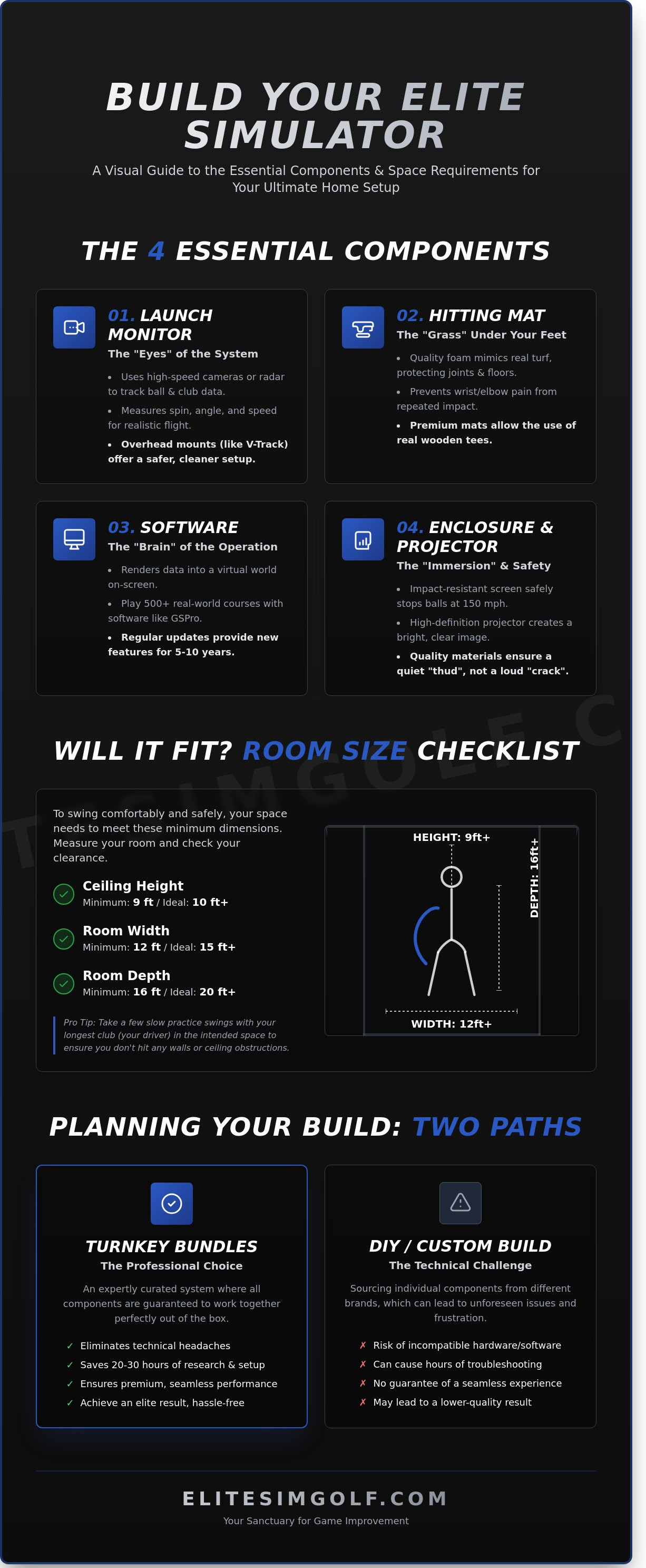
Building a world-class home setup is like assembling a high-performance vehicle. You need specific, high-quality components to ensure the experience feels real. When you search for a golf simulator for sale, you aren't just buying one single machine. You're investing in a bespoke system designed to bring the course to you. Every setup requires four primary pillars to function properly.
Choosing Your Launch Monitor
The launch monitor is the "eyes" of your system. It uses high-speed cameras or radar to watch your ball and club. Floor-mounted units sit on the ground next to your ball. These are common, but they can be tripped over or hit by a stray club. Overhead systems are the elite choice for serious players. They mount to the ceiling, keeping your floor clean and safe. The VTrack Overhead Golf Launch Monitor is a premium option that stays out of the way while providing unrivaled data. It tracks every spin and angle the moment you make contact.
The Importance of a Quality Hitting Mat
The hitting mat is the "grass" you stand on. It's more than just a piece of carpet. A cheap mat is often just thin plastic over hard concrete. If you hit off a poor mat for more than 30 days, you might feel pain in your wrists or elbows. Quality mats use specialized foam to mimic the feel of real soil. This protects your joints and your home's subfloor from damage. A thick, premium mat even lets you use real wooden tees. It's a simple way to make your practice feel authentic.
The Software: The Brain of the System
The software is the brain that does all the math. It takes the data from your monitor and builds a virtual world. Programs like GSPro are famous because they let you play over 500 real-world courses. You can walk the fairways of legendary locations without leaving your house. Software updates keep your golf simulator for sale feeling like a new product for 5 to 10 years. These updates improve the graphics and add new features regularly. To start your journey toward mastery, you can explore a premium golf simulator package that fits your space.
The Projector and Enclosure
The enclosure is the "cage" that keeps you and your home safe. It uses heavy-duty fabric to stop golf balls flying at 150 mph. The projector is the "movie player" of the group. It sits above or behind you and shines the golf course image onto the impact screen. A high-quality screen is designed to be quiet when the ball hits it. This creates a seamless, immersive environment where you can focus entirely on your game.
Will It Fit? Measuring Your Room for a Simulator
Before you commit to a golf simulator for sale, you need to be certain your room can handle the physical demands of the game. This isn't just about the size of the screen. It's about the arc of your swing and the safety of your home. Measuring your space is the first step toward creating a professional-grade sanctuary. You must consider three main dimensions: height, width, and depth. If you ignore these, you might find yourself with a premium system that you can't actually use.
The Ceiling Height Test
Ceiling height is the most critical measurement for any home setup. If your ceiling is too low, you risk damaging your property or, worse, your favorite clubs. Most experts agree that 9 feet is the minimum height required, but 10 feet is the magic number for total comfort. At 10 feet, even the tallest players can swing a driver without any fear of impact.
- The Driver Test: Take your longest club and stand in the center of the room. Perform a very slow, controlled swing to see how close you get to the ceiling.
- Clearance: You should ideally have at least 6 to 10 inches of "buffer" space above the club at its highest point.
- Lower Ceilings: If your ceiling is only 8.5 feet, you might be restricted to using shorter clubs like 7-irons or wedges to stay safe.
Room width is equally vital. You need enough space so that you don't hit the wall behind you during your backswing. A width of 10 feet is the baseline, but 12 feet is much better. This extra space allows you to stand in the center of the screen, which makes the experience feel more realistic. For depth, aim for a total of 15 feet. You need 8 to 10 feet between the ball and the screen to let the launch monitor track the ball properly. You also need about 5 feet behind you for a safe swing arc.
Retractable vs. Permanent Setups
When looking for a golf simulator for sale, think about how you use your room daily. A permanent setup is a dedicated luxury. It involves a fixed frame and side padding that stays in place. This is perfect for a basement or a spare bedroom transformed into a bespoke golf suite. It's always ready for a quick practice session, providing a turnkey solution for the serious golfer.
If you're using a shared space like a garage, a retractable enclosure is a smarter choice. These systems use a motorized screen that rolls up into a housing unit on the ceiling. You can turn your practice facility back into a parking spot in less than 2 minutes. This flexibility ensures your home remains functional while still providing a premium golf experience when you want it. Don't forget to leave space for "hidden" needs, like a small desk for your computer or a 3-foot area for seating so friends can watch you play.
Planning Your Budget: From Beginner to Pro
Finding the right golf simulator for sale is about more than just looking at a price tag. It's about building a sanctuary for your game. You should start by separating your "must-have" features from the "nice-to-have" extras. You definitely need a launch monitor to track the ball, a hitting mat, and a net or screen. Professional lighting or custom side curtains are beautiful additions, but you can always add those later as you refine your space.
Your next step is choosing between a turnkey bundle or a DIY project. A DIY setup might save you $600 initially, but it often requires 15 to 20 hours of research and troubleshooting to make different brands work together. You must also factor in the "brain" of the system. Most high-quality software needs a gaming computer with at least 16GB of RAM or a modern tablet. Budgeting $1,200 for a dedicated PC ensures your graphics look realistic and the ball flight matches your real-world swing without any lag.
Don't overlook the logistics of your purchase. Shipping a full enclosure can cost $250 or more because the components are heavy and oversized. Always choose a vendor that offers dedicated technical support. Having an expert to call when you're setting up your software protects your investment and saves you from hours of frustration.
Bundles: The Easiest Way to Buy
Bundles are the gold standard for beginners because they remove the guesswork. Everything in a "full package" deal is guaranteed to work together perfectly from day one. These packages usually include the launch monitor, a projector, a hitting mat, and the frame. This turnkey approach means you spend less time reading manuals and more time swinging your clubs. It's an elite way to bring the course into your home without the stress of technical mismatches.
Long-term Value vs. Upfront Cost
Think of a simulator as an investment in your lifestyle and your home's value. A premium launch monitor often retains 75% to 85% of its resale value even after two years of regular use. You also save significant money every week. If you hit two buckets of balls at a local range, you're likely spending $35 plus gas and travel time. Over a full year, owning a home simulator can save you more than $1,800 in practice fees and fuel. It is a bespoke solution that pays for itself through convenience and consistent improvement.
Ready to experience professional-grade accuracy in your own home? Discover the V-Track Overhead Launch Monitor and start your journey toward mastery today.
Why Choose Elite Sim Golf for Your Home Setup
Finding a high-quality golf simulator for sale is the first step toward a total lifestyle upgrade. At Elite Sim Golf, we don't just sell boxes of equipment. We curate premium experiences. Our commitment to Elite quality means we only offer brands that we trust and use ourselves. Every product in our catalog undergoes a rigorous 6-month vetting process. If a launch monitor or impact screen doesn't meet our standards during our 40-hour weekly practice sessions, it doesn't make it to our store. You can feel confident that you're choosing from the best technology available today.
Every home is different. You might have a 10-foot ceiling or a narrow garage space. We specialize in bespoke solutions that fit your specific room dimensions. We've helped over 500 homeowners transform their spare rooms into professional-grade hitting bays. Whether you're in New York or California, our national support network ensures your gear arrives safely. We provide reliable shipping across all 50 states and offer expert advice at every turn. We treat you like a partner in your golf journey. This concierge approach means we are with you from the first measurement to the moment you hit your first virtual drive.
Expert Help When You Need It
Big-box retail stores often sell generic packages. Their staff might not know the difference between camera-based tracking and radar technology. Our specialists focus only on golf simulators. We take the technical headache away by explaining everything in plain English. We simplify the data so you can focus on your swing. Our team has a 98% satisfaction rate because we focus on making your dream golf room a reality without the stress of complex DIY setups. We handle the hard parts so you can enjoy the game.
Get Started Today
Your journey to better golf starts with the right equipment. You can browse our hand-picked selection of launch monitors and durable enclosures right now. If you want a clean, professional look, we recommend the VTrack Overhead Golf Launch Monitor. It mounts to the ceiling, which keeps your floor clear and protects the sensors from stray clubs. It's a pro-level choice for any serious home setup. Finding the right golf simulator for sale is about more than just a price tag. It's about your growth as a player. Your dream of golf without limits starts with one simple choice. Let's build your perfect setup together.
Step Into Your Own Private Fairway
You've seen that building a home setup is simpler than it looks. First, you just need a room with about 9 feet of ceiling height so you can swing freely. Second, you'll need the core pieces like a hitting mat and a launch monitor, which is the electronic device that tracks your ball. Finding a high quality golf simulator for sale is the final step to enjoying the game whenever you want. It's about turning your extra space into a sanctuary for improvement.
Elite Sim Golf makes this process seamless. We're an authorized dealer for top brands like Garmin, Uneekor, and SkyTrak; you'll know you're getting 100% genuine equipment. Our custom simulator builder tool helps you pick the right parts without any guesswork. We provide expert support across all 50 states and offer reliable shipping to get your setup home safely. You're not just buying gear; you're investing in a turnkey solution for your lifestyle. We're ready to help you create a world class experience right in your living room.
Browse Our Premium Golf Simulators for Sale
Your dream of playing every day is finally within reach, and we can't wait to see you take that first swing.
Frequently Asked Questions
How much space do I really need for a home golf simulator?
You generally need a room that is at least 10 feet high, 10 feet wide, and 15 feet deep to swing safely. This space ensures your longest club doesn't hit the ceiling or the walls during a full follow-through. Creating this Elite sanctuary in your home provides enough room for the ball to fly 8 feet before hitting the screen. A larger room allows for a more comfortable social experience when friends join your session.
Can I use a regular golf ball with an indoor simulator?
You can use any standard golf ball with your system, but it's best to use new, clean balls to protect your equipment. Dirt or scuff marks on a used ball can permanently stain or even tear your premium impact screen over time. Some high-end launch monitors work best with specific "marked" balls that feature small dots. These dots help the cameras track spin more accurately, which is vital for seeing your true ball flight on screen.
Do I need a special computer to run the golf software?
You need a computer with a dedicated graphics card, such as an NVIDIA RTX 3060 or better, to run modern golf software smoothly. Standard office laptops don't have the processing power to display 4K golf courses without lagging or freezing. A PC with 16GB of RAM and an Intel i7 processor ensures your experience remains seamless and realistic. This technical setup is the engine that drives your unrivaled indoor golfing experience every single day.
Is it hard to set up a golf simulator by myself?
Assembling a complete golf simulator for sale typically takes between 6 and 10 hours for a beginner. You'll need to mount the projector, hang the impact screen, and calibrate the tracking software to ensure everything is level. Many owners prefer a turnkey installation to avoid the technical stress of cable management and software updates. This professional service ensures your Elite system is ready for use without any frustrating trial and error or hardware issues.
Can a golf simulator actually help me lower my handicap?
A simulator helps you lower your handicap by providing instant, accurate data on every swing you take. A 2022 study showed that golfers who practice with launch monitors improve their shot consistency by 15 percent over six months. You can work on specific yardages and swing paths in a controlled environment regardless of the weather outside. This mastery of your own data leads to more confidence and better decision-making when you return to the course.
What is the difference between a photometric and infrared launch monitor?
Photometric monitors use high-speed cameras to take thousands of pictures of the ball, while infrared systems use light sensors to track club movement. Camera-based systems are often the preferred choice for a premium golf simulator for sale because they measure ball spin accurately indoors. This technology ensures your virtual shots mirror your real-world performance with incredible precision. Selecting the right monitor is a key step in building a bespoke setup that meets your high standards.
Can I use a golf simulator for other sports or movies?
You can easily use your simulator screen as a high-end home cinema or a multi-sport gaming hub for the whole family. Many software packages include options for soccer, baseball, and even hockey using the same tracking technology. Because the impact screen is a large, flat surface, it's perfect for projecting 4K movies or big sporting events. This versatility transforms your golf room into a social centerpiece that offers a premium lifestyle upgrade for everyone.
This versatility has also led to a boom in commercial indoor golf venues and sports bars. For hospitality businesses looking to manage bookings, food, and beverage sales in such an environment, a specialized system is essential. The technology offered by industry leaders like Shift4 POS UK can help streamline operations for these unique entertainment spaces.
Does a golf simulator require a lot of electricity to run?
A golf simulator uses roughly 400 to 600 watts of power per hour during a typical practice session. This consumption is comparable to running a standard desktop computer and a projector at the same time. If you practice for 10 hours a week, it adds about 2 dollars to your monthly electric bill based on average utility rates. You don't need special wiring because these components plug directly into your home's regular 120-volt wall outlets.
Find similar articles:
golf simulator for sale
